For years, decentralized finance existed largely on the edges of the financial system.
It was innovative, fast-moving and often experimental—but for many people, it was also difficult to understand.
Users needed crypto wallets. They had to navigate unfamiliar interfaces, manage blockchain networks and understand concepts such as liquidity pools, smart contracts and decentralized exchanges.
That is beginning to change.
As blockchain infrastructure matures and financial applications become easier to use, decentralized finance is gradually moving toward a more accessible model. The technology is still complex underneath, but the experience presented to users is becoming simpler.
And that shift could matter more than another wave of speculative growth.
Because DeFi’s biggest opportunity may not be attracting people who already understand crypto.
It may be making decentralized financial services understandable enough for people who don’t.
DeFi Is Growing Beyond Its Experimental Roots
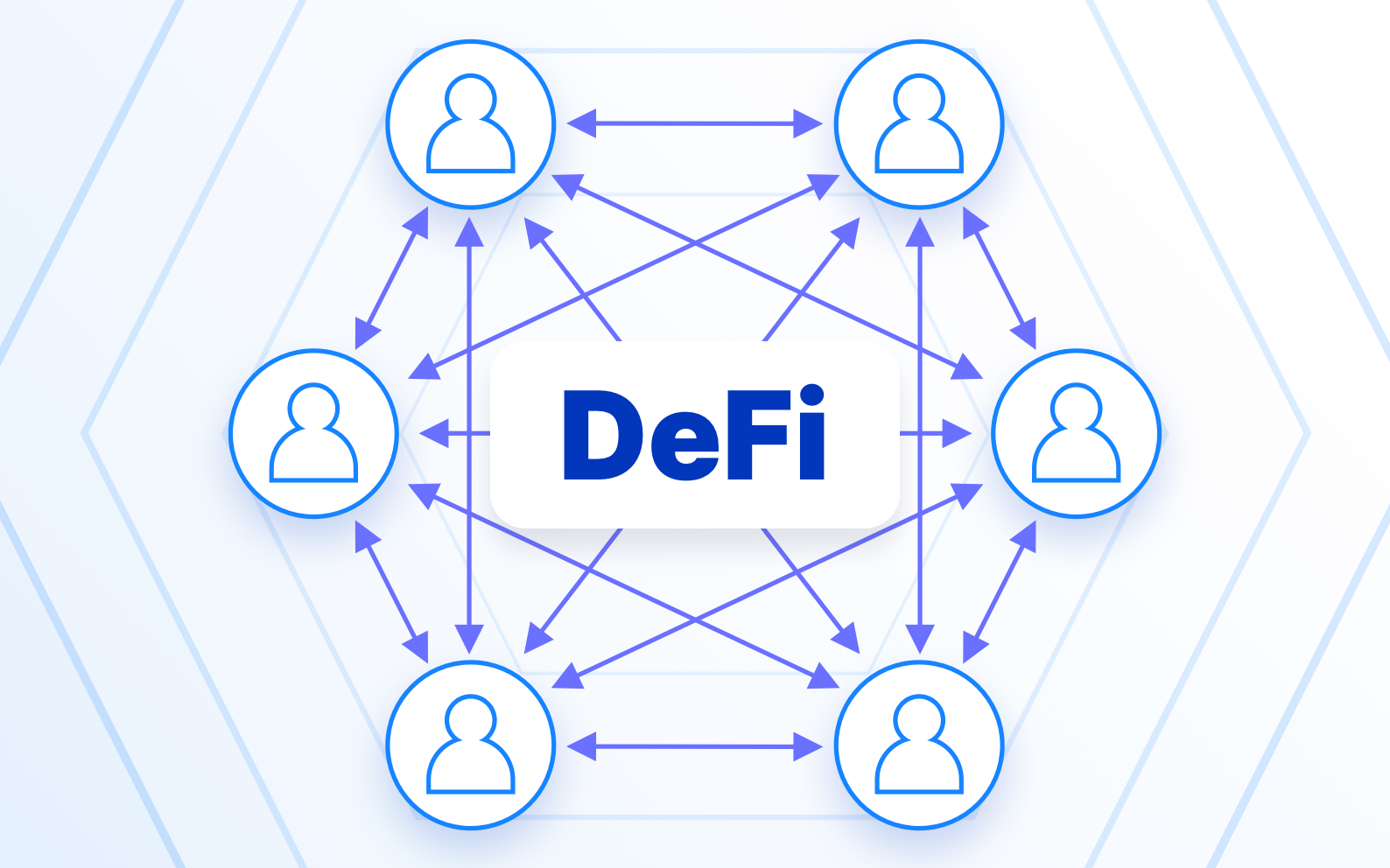
Decentralized finance, commonly known as DeFi, refers to financial applications built using blockchain networks and smart contracts.
Instead of relying entirely on banks, brokers or other centralized intermediaries, DeFi protocols can allow users to interact directly with financial infrastructure through software.
Lending, borrowing, trading, asset management and payments can all be implemented through decentralized systems.
The concept is powerful.
But the early DeFi experience was not designed for everyone.
Users often needed technical knowledge just to get started.
That created a significant barrier between the technology and mainstream adoption.
Now, developers are increasingly focused on removing those barriers.
Better Interfaces Could Be the Real Breakthrough
One of the least glamorous but most important developments in DeFi is the improvement of user experience.
Financial technology succeeds when complexity stays behind the interface.
Most people do not want to understand how a payment network routes a transaction.
They simply want the payment to work.
DeFi is moving toward the same principle.
Wallets are becoming easier to use.
Applications are becoming more intuitive.
Blockchain interactions can increasingly be abstracted away from the user.
Instead of asking someone to understand every technical step, platforms can increasingly guide them through the desired outcome.
That could make decentralized finance much more approachable.
Wallets Are Becoming More Than Storage
Crypto wallets were originally viewed primarily as places to hold digital assets.
That role is expanding.
Modern wallets can act as gateways to decentralized applications, identity systems, financial services and digital assets.
The wallet could eventually become a user’s financial interface for multiple blockchain-based services.
This is important because users do not necessarily want to manage dozens of separate accounts.
They want one simple way to access financial tools.
The more seamlessly wallets can connect users to different services, the more practical DeFi becomes.
Decentralized Exchanges Continue to Evolve
Decentralized exchanges, or DEXs, remain one of DeFi’s most important applications.
They allow users to trade digital assets without relying on a traditional centralized exchange for every transaction.
Early DEXs could be difficult for newcomers.
Liquidity could be limited, interfaces could be confusing and transaction costs could be unpredictable.
The technology has evolved considerably.
Liquidity mechanisms have become more sophisticated, trading interfaces have improved and developers continue experimenting with ways to make decentralized trading faster and more efficient.
The competition between centralized and decentralized exchanges is therefore no longer simply about ideology.
It is increasingly about which experience users prefer.
Lending Is Becoming More Programmable
DeFi lending represents another major use case.
Traditional lending relies on institutions to assess borrowers, manage accounts and enforce agreements.
DeFi protocols can automate many of these functions through smart contracts.
Users can deposit assets into lending markets.
Other users can borrow against eligible collateral.
Interest rates can adjust according to market conditions.
The underlying system operates according to predefined rules encoded into software.
This does not eliminate risk.
Smart-contract vulnerabilities, collateral volatility and liquidity conditions can create serious problems.
But the concept demonstrates what programmable finance can look like.
Financial agreements can increasingly become software.
Stablecoins Could Become a Gateway
Stablecoins may play an especially important role in making blockchain-based finance accessible.
Unlike highly volatile cryptocurrencies, stablecoins are designed to maintain a relatively stable value, often by referencing a fiat currency.
That makes them easier to understand for users who are unfamiliar with crypto markets.
A person may not want exposure to the price volatility of a cryptocurrency.
But they may still find value in a digital asset that can move across blockchain networks quickly.
Stablecoins can therefore act as a bridge between traditional money and blockchain-based financial applications.
Their growing importance could strengthen the broader DeFi ecosystem.
Cross-Chain Infrastructure Is Becoming Important
The blockchain industry is no longer dominated by a single network.
There are numerous blockchains with different technical characteristics, communities and applications.
That creates an interoperability problem.
If financial liquidity is fragmented across multiple networks, users may face additional complexity.
Cross-chain infrastructure aims to connect these ecosystems.
The goal is to make blockchain-based assets and applications interact more smoothly across networks.
If successful, interoperability could make DeFi feel less like a collection of isolated financial islands.
Instead, it could begin to resemble a connected digital financial system.
Tokenization Could Bring New Assets Into DeFi
Another major development is the tokenization of real-world assets.
The concept involves representing ownership or economic interests in physical or traditional financial assets using blockchain-based tokens.
This could eventually include securities, funds, commodities, property-related interests and other assets.
Tokenization could connect traditional financial markets with decentralized infrastructure.
Imagine financial assets that can be programmed, transferred and settled using blockchain-based systems.
That could create new opportunities for automation and liquidity.
But tokenization also introduces legal and regulatory complexity.
A blockchain token only has meaningful real-world rights if the legal and operational structures behind it support those rights.
Technology alone cannot solve that problem.
DeFi Is Becoming More Institutional
Another important shift is the growing interest from traditional financial institutions.
Banks, asset managers and financial technology companies have increasingly explored blockchain-based settlement, tokenization and digital assets.
This does not mean traditional finance is abandoning centralized systems.
Instead, the two worlds may be moving toward a hybrid model.
Some financial services could continue operating through traditional institutions while using blockchain infrastructure underneath.
That could be a powerful development.
The average consumer may eventually use a financial service powered partly by blockchain without ever interacting directly with a decentralized application.
Regulation Could Bring More Legitimacy
DeFi’s relationship with regulators remains complicated.
Decentralized systems challenge traditional definitions of financial intermediaries.
Who is responsible when a smart contract fails?
Who should be regulated?
How should decentralized protocols handle consumer protection?
These questions do not have simple answers.
But regulatory clarity could ultimately benefit the industry.
Clear rules can give businesses greater confidence to build.
Institutional investors can better understand their obligations.
Consumers can better understand risks.
The challenge will be finding a balance between protecting users and preserving the innovation that makes decentralized finance attractive in the first place.
Security Will Remain a Critical Issue
Accessibility cannot come at the expense of security.
DeFi protocols manage significant amounts of digital value, making them attractive targets for attackers.
Smart-contract vulnerabilities can have serious consequences.
Bridge infrastructure has historically represented another major risk.
User mistakes can also be costly because blockchain transactions can be difficult or impossible to reverse.
As DeFi becomes easier to use, security must become easier to understand as well.
Users should not need to become cybersecurity experts simply to access financial services.
Better safeguards, audits, transaction simulations and warning systems could become increasingly important.
The Real DeFi Opportunity May Be Invisible
One of the most interesting possibilities is that mainstream DeFi may not look like today’s DeFi at all.
People may not visit decentralized exchanges.
They may not manually approve complex blockchain transactions.
They may not even know which network processes their transaction.
Instead, they could use familiar financial applications that quietly rely on blockchain infrastructure.
This could be similar to how the internet works today.
Most people do not think about servers, routing protocols or data centers when they send a message.
They simply use an application.
DeFi could eventually follow the same path.
Accessibility Could Change the Competitive Landscape
If DeFi becomes genuinely easier to use, competition could shift.
The industry would no longer be competing primarily for technically sophisticated crypto users.
It would be competing for ordinary consumers.
That changes the priorities.
Reliability becomes more important.
Customer support matters.
Clear interfaces matter.
Predictable costs matter.
Security matters.
Trust matters.
The best DeFi products may ultimately resemble the best fintech applications—not because they abandon decentralization, but because they make the underlying technology almost invisible.
DeFi Still Has Something Traditional Finance Cannot Easily Replicate
Despite its challenges, DeFi has one distinctive advantage.
It is programmable.
A smart contract can automatically execute rules without requiring every transaction to pass through a traditional intermediary.
That opens possibilities for financial products that operate continuously, globally and transparently.
Developers can build new applications on top of existing protocols.
Users can potentially access financial services from anywhere with an internet connection.
The composability of these systems is one of DeFi’s most powerful characteristics.
One protocol can become the building block for another.
That creates an ecosystem where innovation can happen at multiple layers simultaneously.
But Accessibility Does Not Mean Simplicity Everywhere
There is a danger in oversimplifying DeFi.
Financial systems are complicated because money itself is complicated.
Risk does not disappear simply because the interface becomes easier.
Users still need to understand what they are investing in, what risks they are taking and who—or what—is responsible for the service.
A polished interface can hide complexity without eliminating it.
That means education will remain essential.
The future of DeFi should not be about making risks invisible.
It should be about making the technology easier to understand while clearly communicating those risks.
The Next Stage Could Be More Practical
The first generation of DeFi proved that blockchain networks could support decentralized financial applications.
The next generation may focus more heavily on making those applications practical.
That means better interfaces.
More reliable infrastructure.
Greater interoperability.
Improved security.
Clearer regulation.
More useful financial products.
And stronger connections between traditional finance and blockchain networks.
These developments may not generate the same excitement as a sudden token-price rally.
But they could be much more important.
DeFi’s Biggest Breakthrough May Be Adoption
The most important measure of DeFi’s future may not be how many new protocols are launched.
It could be how many people actually use them.
If blockchain-based finance becomes simple enough that users can access it without understanding the underlying technology, the potential market expands dramatically.
That is when DeFi stops being primarily a crypto-native experiment and starts becoming financial infrastructure.
The transition could happen gradually.
A payment here.
A tokenized asset there.
A lending service integrated into an existing platform.
A wallet that quietly manages blockchain interactions.
Eventually, the technology becomes ordinary.
And ordinary technology is often the technology that has truly succeeded.
A More Accessible Financial Layer Is Emerging
DeFi still faces substantial challenges.
Security risks remain.
Regulatory frameworks are evolving.
Blockchain networks remain fragmented.
User education is still necessary.
And not every decentralized financial application provides a compelling advantage over traditional alternatives.
But the direction is becoming clearer.
Blockchain-based finance is becoming more accessible.
The technology is moving away from interfaces designed primarily for early adopters and toward experiences that can appeal to a much wider audience.
That could become the defining shift of the next DeFi era.
The biggest breakthrough may not be another revolutionary protocol.
It may be the moment when someone uses a blockchain-powered financial service without realizing how much technology is working behind the scenes.
That is when DeFi could truly begin to gain ground—not because everyone suddenly becomes a crypto expert, but because they no longer need to be one.
