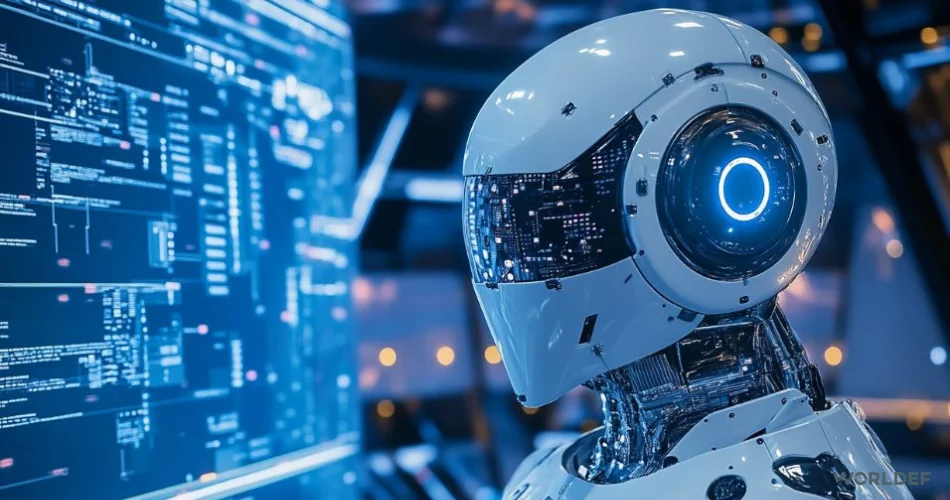
Technology is moving faster than the world is getting used to it.
Only a few years ago, artificial intelligence capable of generating convincing text, images and software code seemed like a distant possibility. Today, AI tools are appearing across workplaces, creative industries, search platforms and consumer applications.
At the same time, robotics is becoming more capable, computing infrastructure is expanding, blockchain is finding new applications and connected devices are generating unprecedented amounts of information.
What makes the current moment different is not simply the number of breakthroughs.
It is the speed at which different technologies are beginning to reinforce one another.
AI needs advanced chips.
Advanced chips power robotics.
Robotics depends on connectivity and computer vision.
Connected systems generate data for AI.
Blockchain can provide digital ownership and programmable records.
Together, these technologies are creating an increasingly interconnected digital ecosystem.
The result could be the beginning of a new technological era—one in which innovation becomes less about individual products and more about intelligent systems working together.
The End of the Isolated Technology
Technology companies have traditionally competed through individual products.
A faster processor.
A better smartphone.
A more capable application.
A larger cloud platform.
But the boundaries between these categories are becoming increasingly blurred.
Today’s technology stack is interconnected.
A modern AI application depends on processors, cloud infrastructure, networking, data storage and software frameworks.
A connected vehicle depends on sensors, computing power, AI models and real-time communication.
A smart factory can combine robotics, edge computing, computer vision and predictive analytics.
This convergence is creating a new type of innovation.
Instead of one technology driving progress, several technologies can advance simultaneously and amplify each other’s capabilities.
That is where the current acceleration becomes particularly interesting.
Artificial Intelligence Is at the Center
AI is arguably the most visible component of this transformation.
The technology has moved rapidly from specialized research environments into mainstream applications.
Generative AI can now assist with writing, coding, research, design and analysis.
But the next stage may be even more important.
AI systems are increasingly being developed to operate across workflows rather than simply respond to isolated requests.
AI agents can potentially use tools, access information, perform multiple steps and work toward defined objectives.
That could transform software from something people operate manually into something that actively helps complete tasks.
Instead of asking an application to perform a single function, users may increasingly describe an outcome and let AI determine how to achieve it.
This could fundamentally change the way people interact with computers.
The Workplace Is Becoming More Automated
The impact on business could be substantial.
Companies spend enormous amounts of time processing information.
Employees read emails, organize documents, prepare reports, analyze data, schedule meetings and move information between different systems.
Many of these tasks are repetitive.
AI can increasingly automate portions of them.
That does not necessarily mean eliminating human workers.
Instead, it could shift human attention toward decisions that require judgment, creativity and interpersonal understanding.
A financial analyst might spend less time assembling data and more time interpreting it.
A marketer could spend less time producing variations of content and more time developing strategy.
A developer could spend less time writing repetitive code and more time designing complex systems.
The productivity implications could be significant.
Computing Infrastructure Is Becoming Strategic
Behind the AI boom is an enormous expansion in computing infrastructure.
Advanced AI requires substantial processing capacity.
That is driving demand for specialized chips, large data centers, high-speed networking and energy infrastructure.
The competition is therefore no longer limited to software companies.
Semiconductor manufacturers, cloud providers, energy companies and data-center operators are becoming critical players in the AI economy.
Computing capacity is increasingly being treated as strategic infrastructure.
The companies and countries capable of building and operating advanced computing systems could gain an important advantage in the next phase of technological development.
Robotics Could Bring Intelligence Into the Physical World
AI is primarily digital.
Robotics gives it a physical presence.
This combination could become one of the most important technology trends of the coming years.
Robots have traditionally excelled at repetitive tasks in controlled environments.
But modern AI can give machines greater ability to interpret their surroundings, understand instructions and adapt to changing conditions.
That could expand robotics into logistics, agriculture, healthcare, manufacturing and other industries.
The key breakthrough is not simply better mechanical hardware.
It is the ability to combine physical machines with increasingly sophisticated software intelligence.
A robot that can understand its environment is capable of handling considerably more complex tasks than one that simply follows a fixed sequence.
The Physical World Is Becoming Digitized
Sensors are creating another important shift.
Machines, vehicles, buildings and infrastructure can increasingly generate continuous streams of data.
That information can be analyzed in real time.
A factory can monitor equipment.
A vehicle can interpret road conditions.
A building can track energy usage.
A city can analyze traffic patterns.
This creates a bridge between physical environments and digital systems.
Digital twins take that concept even further by creating virtual representations of physical objects or systems.
As AI becomes better at analyzing these digital representations, organizations can potentially predict problems, test scenarios and optimize operations before making physical changes.
Edge Computing Is Moving Intelligence Closer
Not every decision can wait for a remote cloud server.
Autonomous vehicles, industrial machinery and other real-time systems often require extremely fast responses.
Edge computing addresses this by moving processing closer to where data is generated.
The combination of edge computing and AI could enable machines to make decisions locally while reducing the need to send every piece of information to centralized data centers.
That could make autonomous systems faster and potentially more resilient.
As the number of connected devices grows, edge infrastructure is likely to become increasingly important.
Blockchain Is Evolving Alongside the Digital Economy
Blockchain is also entering a different stage of development.
The technology’s early reputation was closely connected to cryptocurrencies and speculation.
Today, businesses and financial institutions are increasingly exploring blockchain for more specific purposes.
Tokenized financial assets, stablecoins, digital ownership and programmable transactions are among the areas attracting attention.
The World Economic Forum has highlighted tokenization as a significant trend in the development of digital financial infrastructure.
The important point is that blockchain does not necessarily have to replace traditional systems.
It can become part of them.
A financial institution could use blockchain-based infrastructure for settlement while customers continue interacting through familiar applications.
That type of adoption could be less visible but potentially more significant.
Connectivity Is Becoming the Nervous System
As technology becomes more intelligent, connectivity becomes increasingly important.
AI systems need access to information.
Robots need to communicate.
Connected vehicles need real-time data.
Smart infrastructure needs to coordinate different systems.
This is pushing networks toward greater speed, reliability and responsiveness.
The future of connectivity is therefore not simply about downloading files faster.
It is about enabling machines and systems to communicate continuously.
That could become essential as autonomous technologies become more widespread.
Quantum Computing Remains a Longer-Term Frontier
Not every emerging technology is developing at the same pace.
Quantum computing remains one of the most promising but challenging frontiers.
Quantum systems use fundamentally different computational principles and could eventually solve certain problems that are difficult for conventional computers.
Potential applications include drug discovery, materials research, optimization and cryptography.
However, practical quantum computing still faces substantial engineering challenges.
Its development therefore represents a longer-term opportunity.
But its importance should not be underestimated.
If reliable large-scale quantum systems become possible, they could introduce another major transformation into an already rapidly changing technology landscape.
Cybersecurity Becomes More Important
Greater technological capability also means greater risk.
As more systems become connected and automated, the consequences of cyberattacks can become more serious.
AI can help organizations identify suspicious activity, but attackers can also use AI to automate and improve their methods.
Connected devices increase efficiency but also create additional points of vulnerability.
Blockchain systems can provide transparent records but remain dependent on secure smart contracts and infrastructure.
Robotic systems introduce physical safety considerations.
The next technology era will therefore require cybersecurity to evolve alongside innovation.
Security cannot simply be added after a product is built.
It needs to be part of the architecture.
Regulation Will Influence the Direction
Technological progress is also creating new challenges for governments.
AI raises questions around privacy, transparency, copyright and accountability.
Autonomous machines raise questions about safety and liability.
Blockchain introduces new questions around digital assets and financial regulation.
Quantum computing could eventually affect existing cryptographic systems.
Policymakers are therefore facing a difficult challenge.
They must create rules that protect the public without preventing useful innovation.
The regulatory environment could become one of the most important factors determining where new technologies develop and how quickly businesses adopt them.
The User Experience Is Becoming Simpler
One of the most interesting consequences of technological advancement is that the technology itself may become less visible.
People may not need to understand how an AI system works.
They may not know which cloud infrastructure powers an application.
They may never see the blockchain behind a tokenized asset.
They may interact with autonomous systems without understanding the algorithms controlling them.
This is a common characteristic of mature technology.
The complexity moves behind the interface.
Users care about outcomes.
They want software that works, payments that settle quickly, devices that respond intelligently and services that require less effort.
The underlying technology becomes infrastructure.
Innovation Is Becoming Continuous
Another major change is the speed of the development cycle.
Technology companies can now release software updates rapidly.
AI models can improve through successive generations.
Cloud infrastructure can scale quickly.
Developers can build on existing open-source systems.
This means innovation is becoming less like a series of isolated revolutions and more like a continuous process.
Each improvement becomes a foundation for the next one.
That creates a compounding effect.
A better AI model enables better applications.
Those applications generate more data.
More data can improve future systems.
Better infrastructure makes advanced applications cheaper.
Lower costs increase adoption.
The cycle continues.
The Next Winners May Be Integrators
As technologies converge, companies that can connect different capabilities may gain an advantage.
Building a powerful AI model is one challenge.
Building a useful product that combines AI, data, connectivity and automation is another.
The most valuable technology companies of the next era may therefore be those capable of turning multiple breakthroughs into practical solutions.
The winning formula may not be a single technological advantage.
It could be integration.
A New Digital Foundation Is Emerging
The technology industry is approaching an important inflection point.
AI is becoming more capable.
Computing infrastructure is expanding.
Robotics is becoming more adaptive.
Connectivity is becoming more important.
Blockchain is finding practical applications.
Edge computing is moving intelligence closer to devices.
Quantum computing continues advancing toward potential real-world use.
These developments are not happening independently.
They are increasingly connected.
That convergence could create an entirely new digital foundation for businesses and consumers.
The Real Acceleration Is Still Ahead
Technology has always evolved.
What makes the current period different is the number of major technologies advancing simultaneously.
More importantly, these technologies are beginning to reinforce one another.
AI gives machines intelligence.
Robotics gives intelligence a physical form.
Connectivity allows systems to communicate.
Edge computing allows decisions to happen closer to the source.
Blockchain can provide programmable records and digital ownership.
Advanced computing continues expanding the limits of what machines can accomplish.
The result could be a technological ecosystem far more capable than any individual technology suggests.
The next era may therefore not be defined by one revolutionary invention.
It could be defined by the convergence of many technologies into systems that are faster, smarter and increasingly autonomous.
That revolution is already underway.
And as the pace of innovation accelerates, the most important question may no longer be what technology comes next.
It may be how quickly today’s technologies can combine to create something nobody has imagined yet.